
Post-Platform: Creativity After Constant Visibility
Why we need distance from platforms to think clearly and reclaim agency

Something has been breaking for a long time. The conditions required for sustained attention and practice no longer hold.
Creative work now lives inside systems built for constant visibility and connection. Social life, discourse, identity, and production have been pulled into the same orbit for years. Platforms optimized for attention quietly became the default environment where thinking, making, and sharing blur together.
This didn’t happen suddenly. It normalized slowly, then completely. Only now does the weight of it feel difficult to ignore.
Design adapted to this environment early.
It became faster and more fluent. More responsive to signals. More present in public space. And over time, in that fluency, something less visible began to erode.
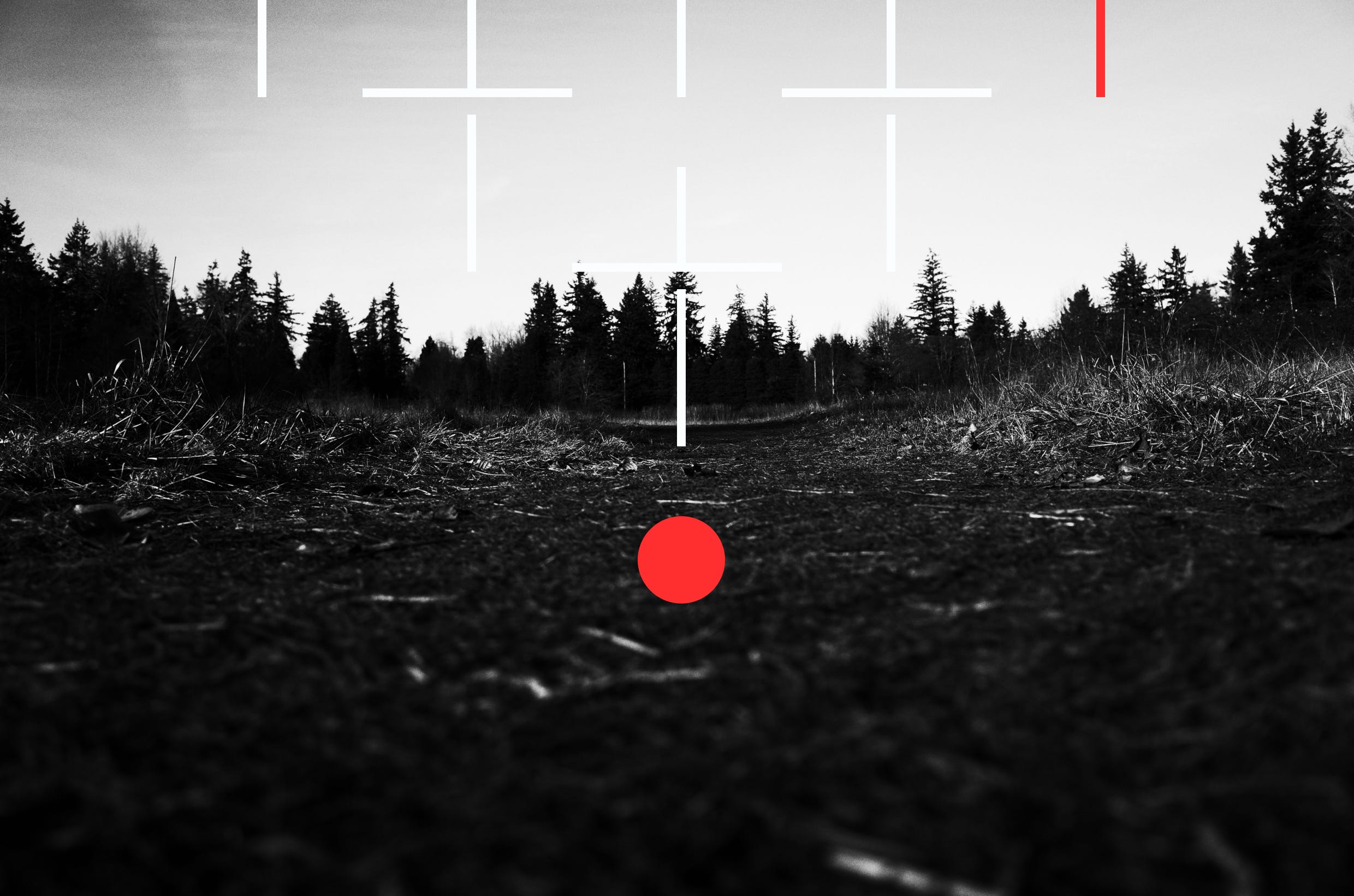
Platforms don’t shape outcomes, they shape conditions
Platforms don’t shape creative work by dictating outcomes. They shape it by altering the conditions under which it forms.
Designers still bring taste and intent to their work. What’s become harder to protect are the conditions where intuition actually develops. The problem appears before anything is made, when attention is already fragmented.
Focus breaks earlier because attention is constantly redirected. Notifications, updates, messages, and feeds occupy the same time and mental space where practice used to live. Work is interrupted not occasionally, but habitually.
As a result, loops fail to close. Ideas are started, partially explored, then displaced by the next input. The sustained practice required for intuition to form becomes harder to maintain.
Reading deeply becomes rare.
Studying technique gets postponed.
Unfinished work stays unfinished.
Over time, practice doesn’t disappear.
It thins.
And thinning is harder to notice than loss.
This isn’t just about social media
When people talk about platforms, they often mean social media. But the pressure has been building across far more than feeds. Many of the tools designers rely on daily are now platforms themselves. Networked by default. Account-based. Optimized for collaboration, sharing, and scale.
I feel this tension most clearly with Figma.
It’s my primary tool. I can do almost anything in it. I don’t want it to go away. At the same time, I’m uneasy with how completely it lives online.
Design tools used to feel more self-contained. Work existed as files you owned, revisited, archived, and returned to over time. Moving tools into shared environments brought real benefits. Easier collaboration. Access from anywhere. Faster iteration.
Those tradeoffs made sense. What’s less clear is what they quietly displaced. Because once everything is connected, uninterrupted practice becomes harder to protect.
Practice doesn’t scale like platforms do
This tension becomes clearer outside digital tools entirely.
Six or seven years ago, I took a continuing studies course at Emily Carr on pen and ink drawing. I didn’t fully know what I was getting into. It just looked interesting.
It turned out to be a deeply compatible medium for me.
Learning it required presence. Time. Repetition. Muscle memory. Failure. Gradual improvement. I couldn’t skim it. I couldn’t optimize it. I had to practice.
That medium became a real addition to my creative toolbelt. Over time, I folded it into analog work, digital work, and mixed media in ways that meaningfully changed the kind of work I can do.
None of that growth happened quickly. None of it could have happened through exposure alone. That kind of development doesn’t come from visibility. It comes from contact, sustained over time.
Signals beyond design
This long-building pressure isn’t limited to creative tools.
It’s starting to surface in how people are thinking about AI as well.
A new class of locally run personal chat systems points to a different arrangement. The interface can still live inside familiar chat apps. But the system itself runs on your hardware, maintained by the individual. The model becomes personal. The data stays with you. The platform becomes an access layer, not the place where intelligence lives.
That distinction matters.
At the same time, organizations like Mozilla are openly framing alternatives to centralized AI development. Their language around a Rebel Alliance signals concern that intelligence, like creativity before it, is becoming too abstracted and too platform-bound.
These efforts don’t prove anything yet.
But when similar patterns emerge across unrelated domains, it usually means the same pressure is being felt in more than one place.
Continuity as the missing variable
That pressure became tangible for me last week at a BC+AI Community event.
Alexandra Samuel’s keynote described long-term use of a personal AI system, not for tasks or productivity, but for sustained dialogue over time. Months of conversation. Ongoing reflection. A place to think with something that could hold context without fatigue or judgment.
What stood out wasn’t speed or capability. It was the role continuity played in how value accumulated. The benefits she described weren’t immediate or easily summarized. Over time, the system retained context across conversations, allowing reflection to build instead of restarting each time.
During the Q&A, a tension surfaced.
If this kind of relationship depends on a platform, continuity is fragile. Models change. Access shifts. The system can disappear.
The response from the room was immediate and practical.
Run it locally.
That suggestion reframed the entire conversation. A local system preserves ownership, continuity, and agency. It doesn’t scale, and it doesn’t need to. It exists to be sufficient, legible, and durable for the person using it.
This is what post-platform points toward.
Not rejecting AI, but relocating it. Away from feeds and optimization loops. Toward personal, long-lived systems that protect continuity of thought rather than maximize output.
When platforms displace practice
Platforms are excellent at surfacing finished work. They are far less suited to supporting the conditions that produce it.
As more time moves into platforms, practice quietly gives way to refinement and replication. Trending styles circulate faster than technique. Output becomes more visible than learning.
This didn’t happen because anyone chose it. It happened because systems designed for motion slowly replaced spaces designed for depth.
Platforms reward response.
Practice requires friction, repetition, and time.
When inspiration arrives without practice to ground it, it stops motivating. It starts producing pressure. Not from ego, but from hours diverted away from the work itself.
Distribution is not the enemy
I still publish on platforms.
This piece will live on Substack. I share work on LinkedIn. The public square still matters. But I no longer trust platforms as places where formative work should happen. Some platforms felt corrosive enough that I stepped away from them. Others feel more tolerable, at least for now. Even there, the same dynamics surface if you pay attention long enough. The boundary that matters to me now is simple.
Practice happens elsewhere.
Publishing platforms enter later, at the point of release.
Broadcast when ready.
Step back when forming.
Not as a rule.
As a posture developed over time.
Post-platform as signal, not solution
I don’t have proof that creative work is moving offline at scale.
What I have is repetition.
Years of conversations.
A growing fatigue across creative circles.
Podcasts circling the same concerns.
A personal pull toward fewer inputs and deeper loops.
This isn’t data.
It’s accumulated signal.
Post-platform doesn’t mean platforms failed. It means their success has reached a point where the side effects are now felt. The shift isn’t away from technology. It’s away from allowing platforms to dominate the conditions where practice and intuition form.
Orientation, not prescription
I’m not arguing for nostalgia or retreat. This isn’t a call to unplug or reject technology. It’s an attempt to remember where creative capacity actually grows. Not inside feeds or dashboards. Not under constant visibility or pressure to perform.
Those environments are good at surfacing work, but poorly suited to forming it.
Creative capacity grows through sustained attention, repetition, and skills learned slowly enough to change how you think. It grows in conditions that allow intuition to form over time, not through optimization, but through contact and continuity.
If something has been breaking, it isn’t technology itself. It’s the conditions that allow sustained practice to happen in the first place.
The correction, if it comes, won’t arrive as a switch to flip or a framework to adopt. It won’t announce itself through a platform.
It will start quietly.
Off the feed.
Well said. Not a tech specialist myself, but I see the parallels of how your analogy can be extrapolated through society as a whole. In every industry and life. We should strive for a respect and time out recognition of our 200k+ homo sapien brain and what we are capable of. Off the feed is what got us here!
This articulates something I've felt but couldn't name. The distinction between platforms shaping outcomes vs conditions is key, especialy the part about loops that fail to close when attention fragments constantly. That ink and pen example really underscores how depth requries sustained contact, not just exposure.