
One Track, Twelve Realms
A SWARM Case Study in Recursive Creation

On the first R3ALMS album, which I now refer to as ROOT INDEX, I released a track called DMT. At the time, the album was self-titled. It felt cohesive and resolved. The track held its atmosphere and structure without strain, and there was no technical reason to revisit it.
Still, something about it lingered. DMT worked as a single track, but my instinct was that there was more depth there than one version revealed. It felt like I had only mapped part of the potential.
Instead of moving on, I kept looping it. I ran it back through the SWARM protocol to see what else might emerge. This case study is about what happened when I did.
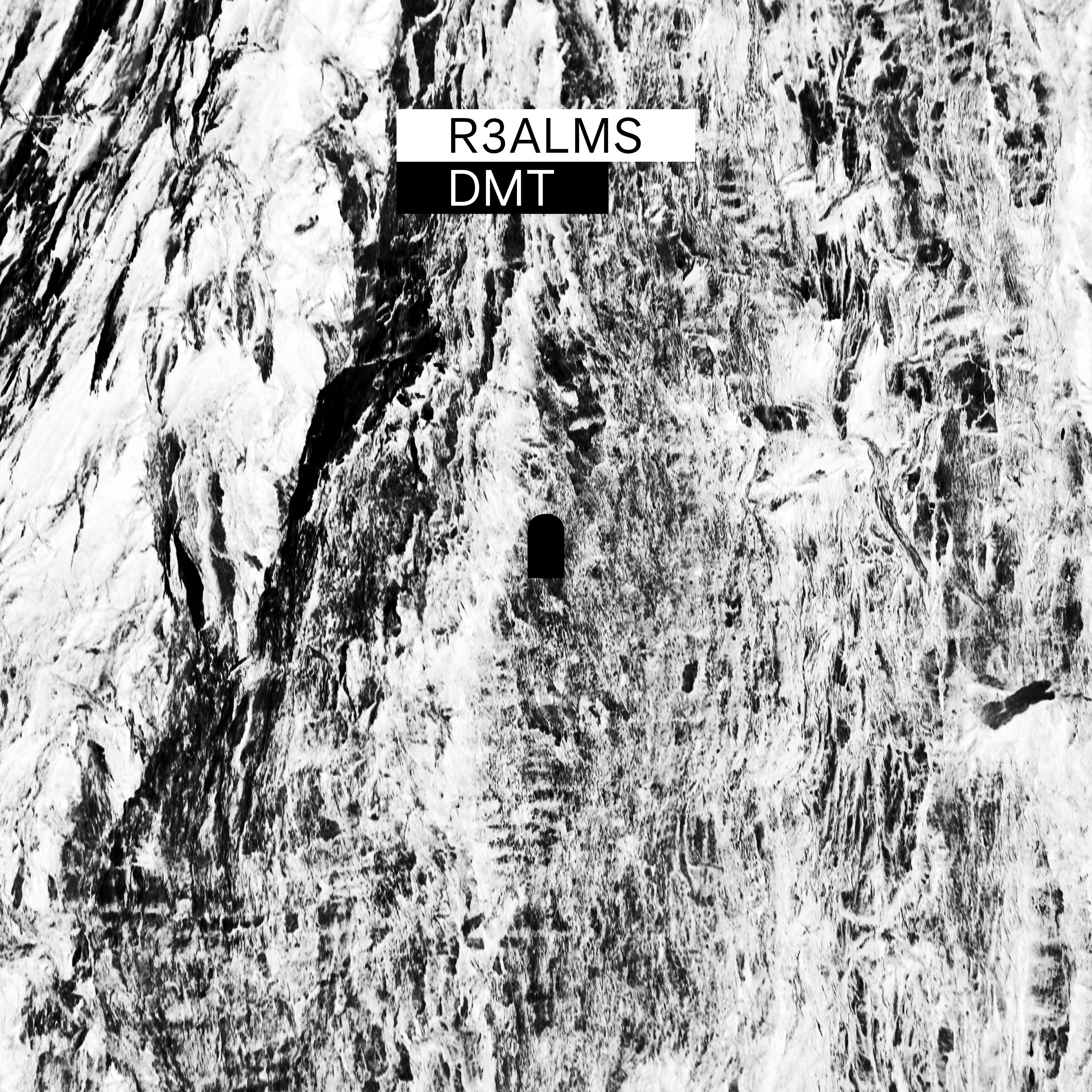
ROOT INDEX Was a Beginning
Renaming the original album ROOT INDEX happened after I re-entered the loop on DMT. The more I returned to it, the clearer it became that the record was not a conclusion. It was a catalogue of origins. An index implies entries and branches. It suggests structured starting material rather than a finished statement.
DMT was one of those starting signals. Instead of moving forward to new material, I moved deeper into the existing work. I ran the protocol again to see what else might emerge from the track.
Repetition Instead of Closure
Most creative workflows collapse once something ships. When the output stabilizes, the loop is considered complete, and the signal is assumed to be fully extracted. When something works, we assume there’s nothing more to find.
SWARM treats stabilization differently. A finished artifact does not automatically mean a finished signal. The real question is not whether the product works, but whether the idea has revealed its range. Returning to DMT was not about dissatisfaction. It was about intuition that there was more there.
Repetition in this context was not revision. It was investigation.
Two Protocols Running in Parallel
As new track versions emerged, it became clear that two distinct protocols were operating at the same time.
The first protocol was the music itself. I wasn’t trying to “improve” the original. I was running variations. I’d shift tempo, simplify or intensify the drums, push the bass harder or pull it back, and change how wide or close the track felt. That produced versions that landed in very different places emotionally, even though they clearly came from the same foundation.
The second protocol operated inside the prompts. Early prompts were structural and categorical. They described format and boundaries. Instrumental electronic track. Locked-in drums. Minimal repetition. No obvious drops. These constraints shaped architecture but kept the outputs orbiting genre familiarity.
Later prompts moved away from structural language and toward lived experience. Instead of specifying sonic form, I described a memory-state. Driving through the Rocky Mountains at 3 AM. A car full of friends on tour. Music playing through worn speakers. Smoke in the air. Twenty-one years old. No tomorrow. This shift altered the nature of the outputs. Space widened. Momentum felt experiential rather than mechanical. The tracks stopped optimizing toward category and began interpreting atmosphere.
The system remained the same. The constraint changed. That change in constraint altered the quality of signal emerging from the loop.
Concept → Example → Abstraction
The concept is straightforward. Feeling is a stronger constraint than genre.
When prompted with structural language, the outputs organized around recognizable patterns. They were coherent and technically stable because they were satisfying a familiar request. They met the specification.
When prompted with the 3 AM mountain drive, the outputs reorganized around mood and memory. The rhythm felt like forward motion instead of measured tempo. The atmosphere felt expansive rather than formatted. The variation between tracks increased without losing cohesion because the constraint was based on feeling rather than category.
Describing how something should feel instead of what it should be shifts the system toward signal instead of surface.
Realms, Not Refinements
As the loops continued, it became clear these weren’t refinements. They were alternate versions of the same idea.
The core signal stayed intact, but I changed how it was weighted and structured. Small shifts altered how the track moved without changing its identity. Each pass exposed a different realm already present inside the same foundation.
Iteration wasn’t about improving the track. It was about testing how much range the original signal could hold without breaking coherence.
Protocol Over Output
This album is not simply a collection of variations. It is evidence of protocol discipline.
AI systems are optimized for output. They are efficient at producing the first coherent version of an idea. Without a human loop, that first version becomes the final one.
SWARM inserts repetition before judgement. It prioritizes intuition over premature satisfaction. It asks what remains latent before declaring something complete.
Returning to DMT after it had already been released forced that principle into practice. One track became twelve realms, not because the original failed, but because the signal was larger than its first expression.
Why This Matters
This case study extends beyond music. In design, writing, research, and product development, the first stable version often feels satisfying. It is rarely exhaustive.
Recursive exploration generates more signal than linear optimization. Memory-based constraints unlock deeper variation than category-based ones. Repetition reveals terrain that a single pass cannot expose.
ROOT INDEX was never the end. It was a structured beginning.
DMT was complete when it first shipped. It was not exhausted.
So I ran the loop again.
And the field expanded.